Showing posts with label pressure canning. Show all posts

Tuesday, April 7, 2015

"Ball Blue Book Guide to Preserving"

Image credit: Target.com
I started canning during the summer of 2013. I want to save money, have the freshest possible food, and minimize the number of artificial ingredients, like most people. I got advice from friends and family, researched the Web, and watched YouTube videos. I thought that was plenty of research and successfully canned tomatoes and salsa. I also made some jams and jellies. So far so good but there was an issue. I live in a Denver suburb and have to make altitude adjustments to processing times. Different online recipes gave different adjustments to the times even for tomatoes. 

There was only one solution-the "Ball Blue Book Guide to Preserving," first published in 1909. Right there on page 5 are the altitude adjustments. The recipe I had for canning red cabbage called for 4 quarts of red cabbage, not the weight or number of heads. The answer is in the equivalents table on page 117-just use the dry measure conversion of cups to quarts. The table even has the measurements for a bushel and a peck! 

Introduction 

The first chapter warmly invites you with the title “Learning About Canning, just one step beyond cooking.” I was afraid of canning due to the fear of spoiled food or worse. This chapter allayed these fears by an easily understandable and thorough explanation of what causes spoilage and how to avoid it. I have a background in chemistry and microbiology and it even answered my questions! The next section describes the two methods of processing, boiling water and pressure. Finally, the equipment used in canning is explained with plenty of photos. As the saying goes, you need the right tools for the job! Since the book is from Ball, all the products pictured are Ball brand, of course. 

Water Bath Canning 

The next three chapters provide recipes and detailed instructions for canning three kinds of foods suitable for water bath canning. The High Acid Foods chapter is probably going to be the one that I refer to the most. High acid foods include all sorts of fruit and tomatoes. Apple recipes include apple rings, sliced apples, applesauce and baking apples. There are many other types of fruits from berries and oranges to tropical fruit such as papayas, mangoes and pineapples. At the end of the chapter, there is an illustrated two page step by step set of directions for canning tomatoes. 

The techniques shown apply to canning all types of food, not just tomatoes. Jams, jellies and fruit spreads are next-yum! There is a two page primer defines the different types of spreads, use of pectin, and the gelling test. There are twelve pages of recipes for butters, conserves, jams, jellies, marmalades and preserves using every kind of fruit that I can imagine. Red onion marmalade and watermelon rind preserves are a bit beyond my imagination, but should tempt the adventurous palate. There is also a chapter titled Something Extra" with many imaginative recipes such as garlic jelly and blueberry basil vinegar, just to name a few. At the end of the chapter, there is an illustrated two page step by step set of directions for canning soft spreads.: 

Pickled foods and sauces complete the group of water bath canned foods. Too many cucumbers in the garden? No problem, there are so many cucumber, pickle and relish recipes that you’ll probably plant even more next year. Spicy chutneys will keep you warm during the winter. Other winter warmers are chili sauce, red hot sauce and taco sauce. 

Pressure Cooker Canning

Pressure cooker canning preserves low acid such as meats, seafood, soup and vegetables. The microorganisms that spoil these types of food can only be killed processing in a pressure cooker canner which raises water temperature to 240 degrees, 28 degrees above boiling. Either a dial gauge or weighted gauge pressure canner can be used. The chapter refers back to the introduction for diagrams of both types of pressure canners and altitude adjustments. These are great make ahead recipes for any size household with all the basics. Dinner is always ready with recipes for beef stew, chicken soup, and chili among others. 

A wide variety of vegetable recipes helps to provide balance meals. Just pick what you like-asparagus, baked beans, creamed corn, greens, okra or potatoes. The other vegetable recipes are too numerous to mention here. At the end of the chapter, there is an illustrated two page step by step set of directions for canning green beans. To be honest, I’m hesitant about pressure cooker canning. I really shouldn’t be because it’s really no different than using an autoclave, as I did back in the day. 

Special Diets 

The low sugar and low salt recipes utilize both water bath and pressure canning. There are several recipes each for fruit, tomatoes, spreads, pickled food, and fruits and vegetables. I was disappointed with this chapter because I hoped for many more recipes that modified standard recipes to reduce salt and sugar. For example, the three bean salad recipe uses two and a half cups of sugar which seems a bit much for a low sugar recipe. 

The recipes for spreads use classic pectin and three to four cups of sugar which is way too much for my taste. Ball has a product called Ball RealFruit Low or No Sugar Needed Pectin but there are no recipes for this product. Luckily, they have a Web site that will provide a recipe based on the type of fruit, jam or jelly and type of pectin. I've made delicious raspberry jam, cherry preserves and apple jelly using recipes produced from this site. I didn't need to add any sugar to the raspberry jam and only one cup of sugar for six jars of apple jelly from juice using the low/no sugar pectin. I just wish that this was included the Special Diets section. 

Other Preserving Methods 


Vintage Canning Books circa 1947
Freezing and dehydrating techniques and recipes are included in the last two chapters. Freezing is a very easy adjunct or alternative to canning that requires only standard kitchen utensils and a freezer. I particularly like this chapter because the recipes don’t even have to be frozen if you don’t want to. I’ll never buy frozen corn again. The step by step directions for freezing corn at the end of the chapter are just terrific. Also, there are recipes for game such as venison, rabbit and squirrel. These remind me of my mother’s Ball Blue Book and Kerr canning books from 1947 that have canning recipes for game and other meats like head cheese, organ meats, and pickled pigs feet. 

Dehydrating foods is only ten pages long. Although the chapter covers the basics, I would get a book devoted entirely to preserving foods this way before attempting beef jerky, dried fruits, or fruit leather. There must be a better name than fruit leather, which sounds rather unappetizing to me. 

Guides

Finally, there several handy guides at the end of the book. The planning guide cross references fruit and vegetable peak seasons to geographic regions. The equivalents guide is where I found the information for the red cabbage, and a bushel and a peck. The Problem Solver and Glossary are particularly helpful for a newbie like me.

Bottom Line

The "Ball Blue Book Guide to Preserving" is the grandmomma of all canning books. Don't start canning without it!


Image credit: Allposters.com


Monday, March 16, 2015

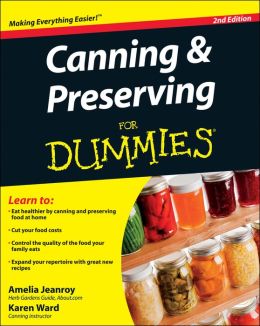
Canning & Preserving For Dummies

Canning and Preserving for Dummies
Image credit: Barnes and Noble
Not just for Dummies!

This is the first book about canning that I bought. I like the For Dummies books because they assume that you are new to a subject and really don't know anything about it. I'll admit that I love the cartoons and read the Part of Tens first! "Canning & Preserving For Dummies" is divided into five parts, each reviewed below.  Or as my Latin teacher would say, "Liber est divisa in partes quinque."

Getting Started

Part I "Getting Started" is exactly what I was looking for in a canning book. I was especially concerned about the equipment that would be needed. No problem, there's a whole chapter listing everything and anything that could possible used in canning with diagrams. I had never even seen a jar lifter or lid wand before reading this book! The authors provide an overview of the three main methods of preserving food-canning, freezing and drying. 

Canning methods to avoid are detailed. I have 1947 Ball and Kerr canning books from my mother which contain some of these methods. Even if Mom or Grandma sealed jelly jars with paraffin without any problems, botulism spores can still develop, so this technique is on the list. The USDA (United States Department of Agriculture) only approves canning by water bath canning or pressure canning. Finally, Part 1 covers how the acidity of food determines the type of canning to use and the various microorganisms that cause spoilage. I live in Denver so I really appreciated the explanation of how altitude affects canning. Methods for detecting spoiled food are described very thoroughly. I use them every time I open a jar.

Water Bath Canning

Part II "Water Bath Canning" dives right into the most common method of canning. The authors take the newbie by the hand and walk through the basic steps of canning common to all recipes. First, gather and prepare both equipment and ingredients. "Mise en place", which means getting everything ready, applies both to chefs and home foodies like me. The mysteries of filling, "debubbling", and head space are unraveled. Processing jars and testing seals are also demystified. The advice on reprocessing sealed jars boils down to don't unless every jar in the batch doesn't seal. The author's emphasis on food safety is consistent throughout the entire book. 

Now the fun begins! Charge into the "Simply Fruit" chapter for a wide variety of the classic fruits used in canning. These include apples for pie filing and applesauce, peaches, pears, and berries. Botanically, tomatoes are a fruit so recipes for tomato pieces, paste, and juice fall into this group. Next up are the jams, jellies, and marmalades that can be made from all types of fruit. The pieces of the pectin puzzle are clearly explained. Low sugar pectin is briefly mentioned but I would have liked to seen recipes using both regular and low sugar pectin. Also, there are very few classic jam or jelly recipes included.

The pickling chapter has all the recipes and techniques that one would hope. There's even a diagram about peeling and seeding a cucumber! Pickles and relish are on next year's canning list. Salsa and chutney recipes complete the water bath canning section.


Vintage Canning Books from 1947
Pressure Canning

Part III "Pressure Canning" does a very good job of taking the pressure and fear out of this technique for food preservation. Canned meat, vegetables, soups, and beans can make your pantry ready for any size of group that piles in at meal time! Choosing the right pressure canner is the most important step of the process. Multiple pictures and diagrams describe every aspect of the pressure canner. 

By the way, a pressure cooker is not the same as a pressure canner. I really appreciate the objective descriptions that don't favor any brand. Safety is strongly emphasized throughout the descriptions, which is very re-assuring. As in the water bath canning chapter, there is a step by step run through of the steps of pressure canning common to all recipes. Vegetable preserving alone is enough to get me to consider pressure canning. A cornucopia would not be enough to describe all the vegetable canning recipes in this chapter. Asparagus, corn, greens, and squash are just a few of the recipes. Particularly helpful is the list of vegetables not recommended for canning like broccoli, cucumbers, or root vegetables (parsnips, rutabagas and turnips). There are lots of illustrations of prepping vegetables for canning. 

Meat preservation by canning doesn't appeal to me. I'd just as soon freeze meat. I'm a city girl and just get meat at the grocery store as needed. However, I do see the utility of canning meat in large amounts such as after obtaining half a cow or a successful hunting or fishing trip. Basic recipes for game, beef, poultry, and fish will fill your shelves with these high protein staples. Finally, there are recipes for what the authors call combined foods. I would call them meals in a jar. Homemade baked beans, chicken stock, and spaghetti sauce with meat make quick and easy dinners on a busy day. As with all canning, preparation is the key to tasty food. I would be tempted to just eat the food after it is cooked without canning!

Freezing

There's much more to freezing than just putting food into a zippered freezer bag and into the freezer. Fresh vegetables need to be blanched, food should be wrapped to prevent freezer burn-just to mention a few techniques. Also reviewed are foods that shouldn't be frozen such as dairy and egg products (except butter). Choosing the correct containment is very important whether a rigid container, freezer bag, vacuum sealing, or wrapping in butcher wrap. All foods need to be labeled and dated so that there is a good rotation old to new items. 

The authors recommend a written inventory which would probably be most useful if you use an upright or chest freezer in addition to the freezer compartment of your refrigerator. Safety is emphasized again in the best options for thawing. It's just easier for me to freeze prepared foods like soup, stews, and vegetables than to pressure can them. The authors cover a wide variety of instructions for freezing these items. Frozen fresh herbs are a very good way to save money over buying them in winter at the supermarket.

Drying and Storing

Did you know that sun drying food is the oldest method of preservation? I didn't. Successful food drying uses many of the principles as canning and freezing. Have the right tools for the job, pick high quality food, and watch for spoilage.The tools of the trade are electric dehydrators, your oven, or the sun. The sun is free but weather dependent so only a very few areas are suitable due to the need for dry
, clear weather and consistent temperatures. I would suggest checking with your local university agricultural extension for more information. You probably have an oven so there's no additional up front cost. However, the oven can't be used for anything else while food is drying. 

Purchasing an electric dehydrator may be the best option if you are going to do a lot of preserving by drying. Dried fresh fruits are probably the most popular because of their many uses-lunches, hiking, or a quick snack to keep a toddler occupied! To prevent discoloration and oxidation, fruit can be blanched or dipped in an antioxidant like citrus juice, ascorbic acid, or commercial preparations. Recipes for a wide variety of fruits are provided-apples, apricots, bananas, cherries and more. The directions for making fruit leathers, another kid favorite, are particularly easy to follow. 

Drying vegetables will assist in storing a large harvest or great sale in a small space. I'm going to try drying tomatoes next year because the canned ones are so expensive. Too many zucchini? Make zucchini chips! For a quick soup and stew mix, combine dried potatoes, carrots, peas, and onions. Dried herbs are probably the next most popular dried food. The authors describe how to air dry commonly used herbs such as dill, oregano, sage, rosemary and thyme. Sorry no parsley! The herbal tea recipes appeal to folks like me that just hate to buy anything at the grocery store if I can make it at home. 

Have a root cellar or stairs that lead from your basement directly outside? You may be able to store root vegetables (beets, carrots, onions, potatoes, turnips) this way. Food quality, containers, and safety are described, as for other preserving methods. The additional considerations of temperature and humidity are thoroughly explained. A tried and true method of preserving.


Image credit - AllPosters.com